
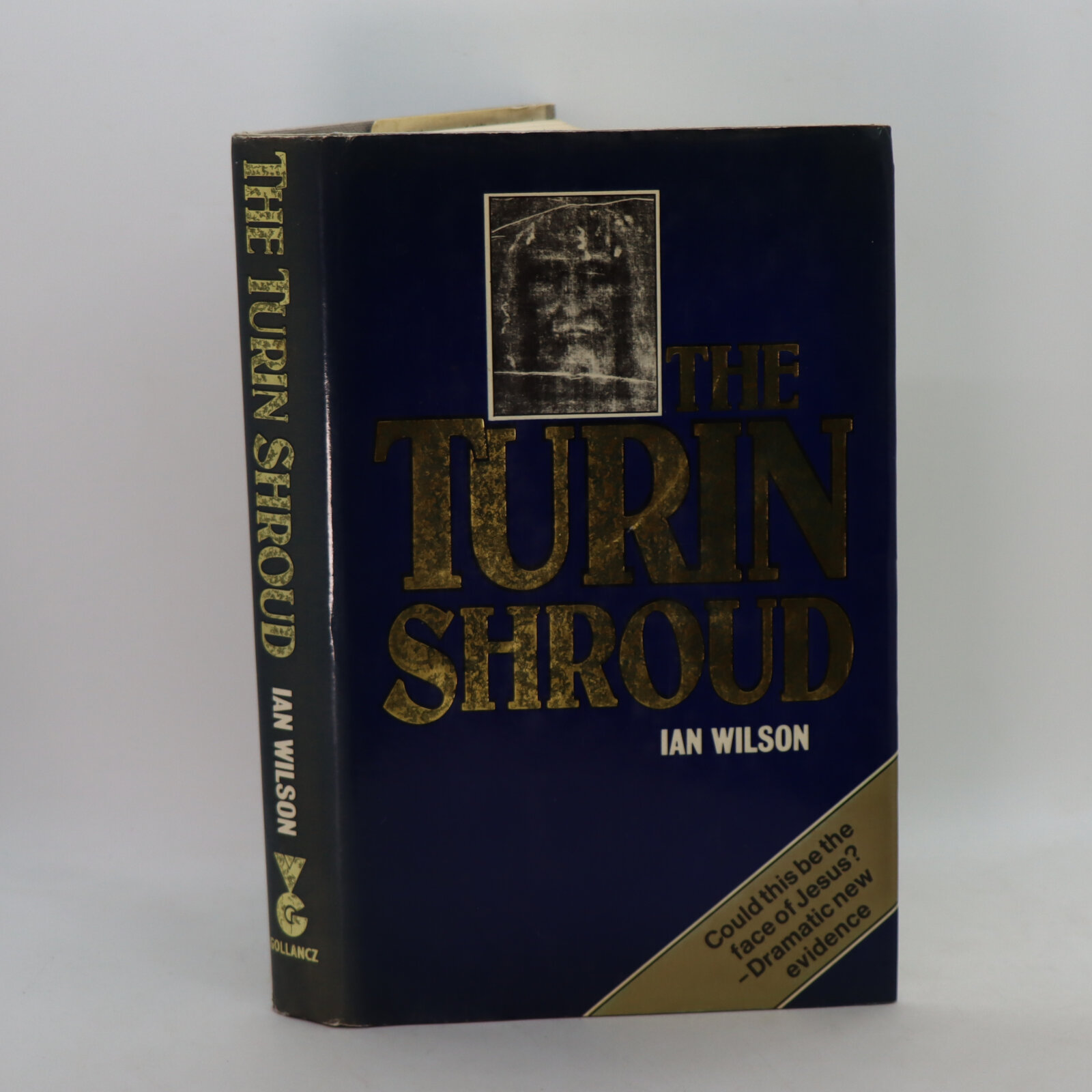
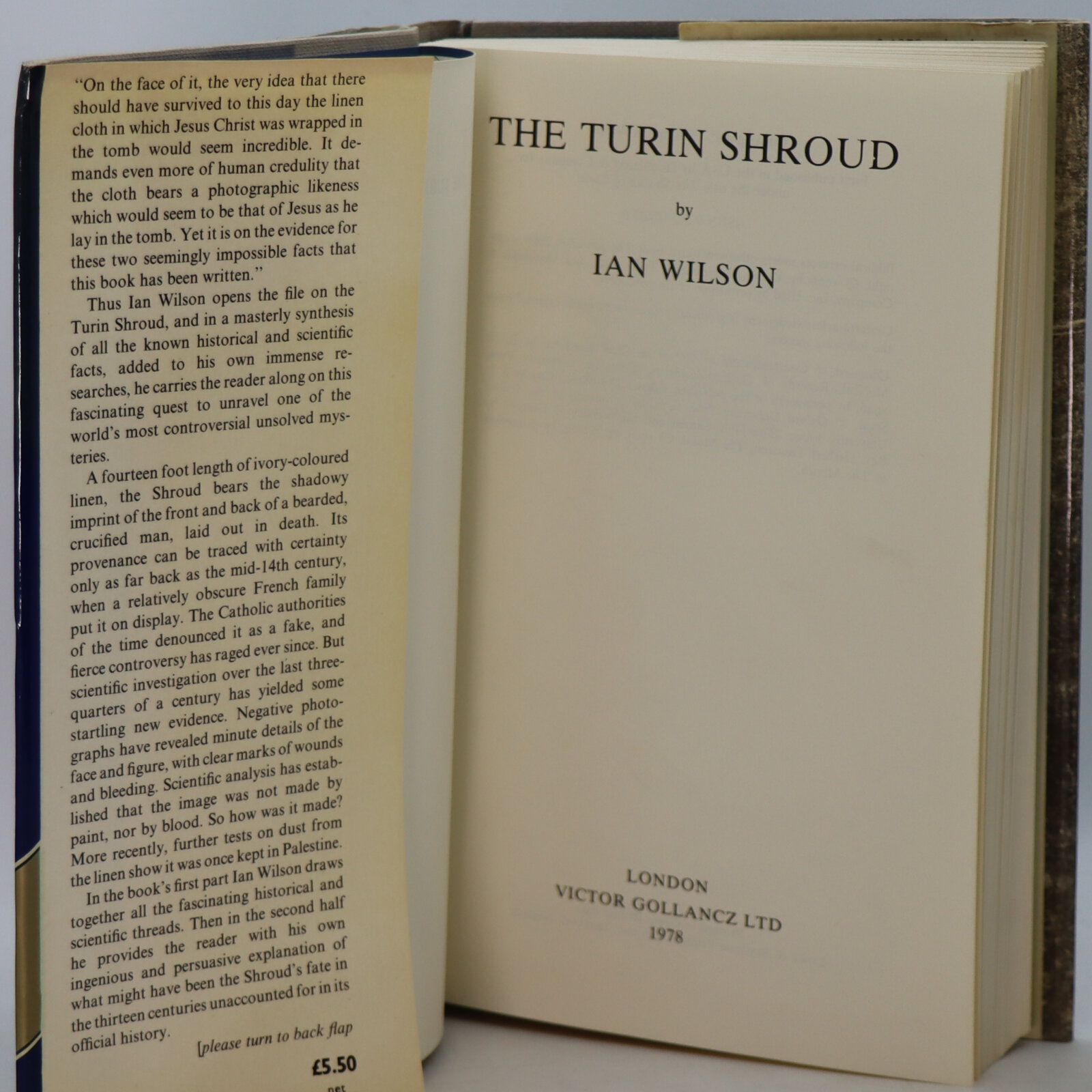
The Turin Shroud.
By Ian Wilson
ISBN: 9781409094708
Printed: 1978
Publisher: Victor Gollancz. London
Edition: First edition
| Dimensions | 15 × 22 × 3 cm |
|---|---|
| Language |
Language: English
Size (cminches): 15 x 22 x 3
Condition: Fine (See explanation of ratings)
£21.00
Buy Now

Item information
Description
In the original dustsheet. Blue cloth binding with gilt title on the spine.
F.B.A. provides an in-depth photographic presentation of this item to stimulate your feeling and touch. More traditional book descriptions are immediately available.
Hardcover. Condition: Very Good. Dust Jacket Condition: Very Good. 1st Edition. The book is tight and square and appears little used.
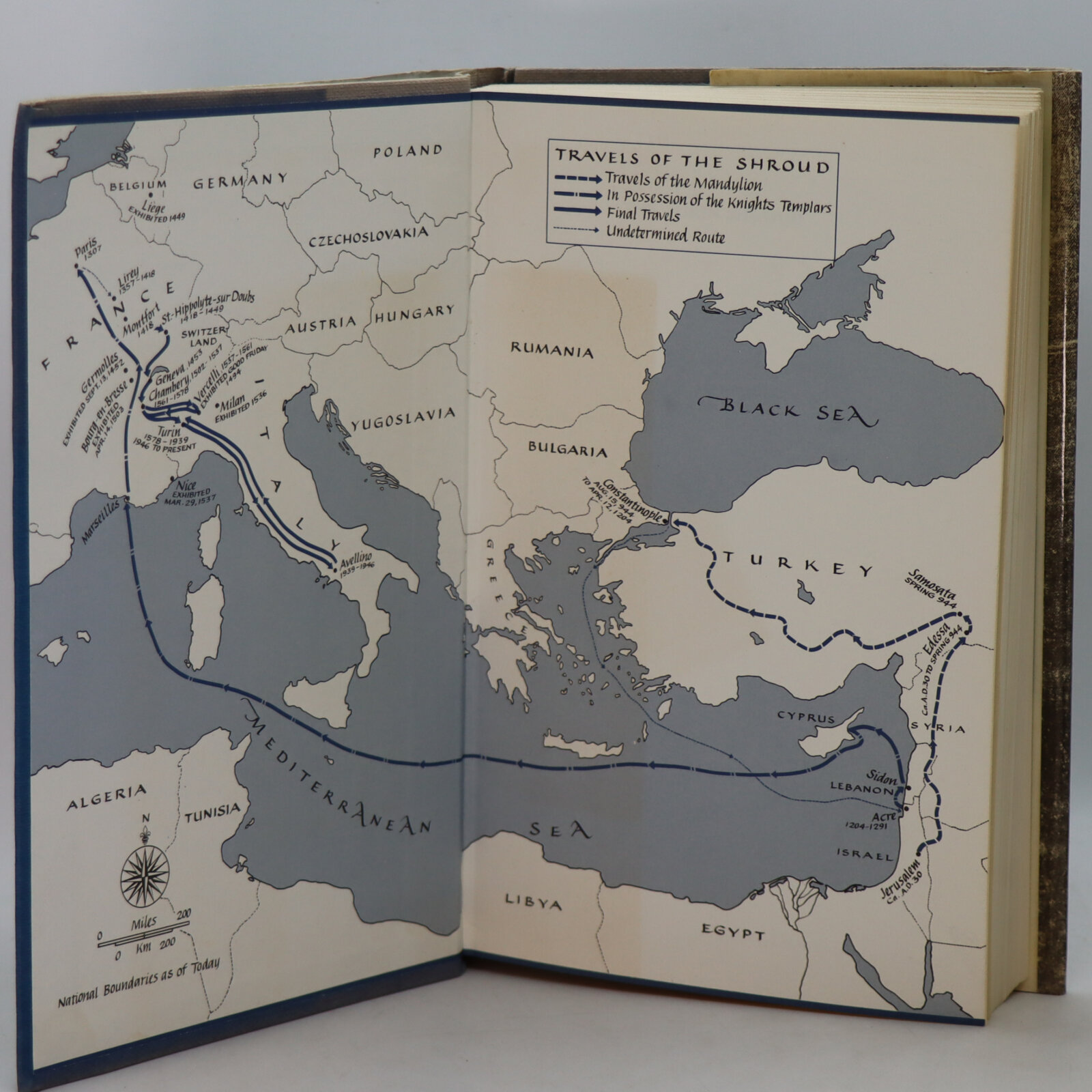
The Shroud of Turin, also known as the Holy Shroud, is a length of linen cloth bearing the negative image of a man. Some describe the image as depicting Jesus of Nazareth and believe the fabric is the burial shroud in which he was wrapped after crucifixion.
First mentioned in 1354, the shroud was denounced in 1389 by the local bishop of Troyes as a fake. Currently the Catholic Church neither formally endorses nor rejects the shroud, and in 2013 Pope Francis referred to it as an “icon of a man scourged and crucified”.
The shroud has been kept in the royal chapel of the Cathedral of Turin, in northern Italy, since 1578.
In 1988, radiocarbon dating established that the shroud was from the Middle Ages, between the years 1260 and 1390. All hypotheses put forward to challenge the radiocarbon dating have been scientifically refuted, including the medieval repair hypothesis, the bio-contamination hypothesis and the carbon monoxide hypothesis.
The image on the shroud is much clearer in a black and white photographic negative—first observed in 1898 by photographer Secondo Pia—than in its natural sepia colour. A variety of methods have been proposed for the formation of the image, but the actual method used has not yet been conclusively identified. The shroud continues to be intensely studied, and remains a controversial issue among scientists and biblical scholars.
Want to know more about this item?
We are happy to answer any questions you may have about this item. In addition, it is also possible to request more photographs if there is something specific you want illustrated.
Ask a question
Related products

Share this Page with a friend
